Art Nouveau Style Seamless Patterns 03: A Versatile Resource for Creative Professionals
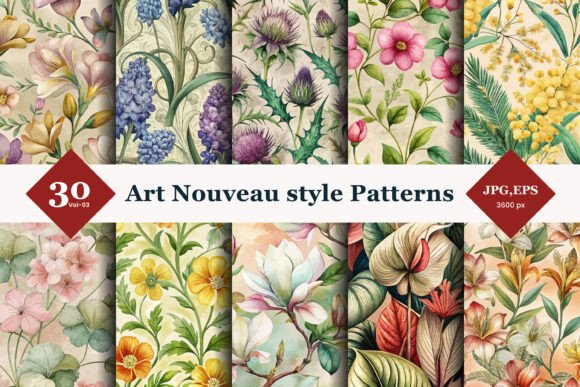
The Art Nouveau movement, which flourished in the late 19th and early 20th centuries, is renowned for its organic forms, flowing lines, and intricate ornamentation. Today, Art Nouveau Style Seamless Patterns 03 brings this timeless aesthetic into the modern creative toolkit. This collection of 30 ornamental patterns offers a rich visual language that blends historical charm with contemporary usability. Designed for professionals and hobbyists alike, these seamless designs are ideal for enhancing a wide range of projects—from print materials to digital branding.
Understanding the Collection’s Role in Your Workflow
Seamless patterns like those found in Art Nouveau Style Seamless Patterns 03 serve as foundational elements in many design processes. They can be applied during the initial planning stages to establish a visual tone or used later to refine details and add sophistication. Their adaptability makes them especially useful when working on projects that require consistent, elegant decoration across multiple surfaces or formats.
For instance, if you're designing a luxury product package, you might use one of these patterns as a background element to evoke a sense of heritage and refinement. Similarly, in fashion design, these motifs could be layered onto fabric mockups or used as accents on labels and tags. The key is understanding how to integrate them without overwhelming the overall composition—striking a balance between detail and clarity.
Before Starting a Project: Planning and Inspiration
Before diving into a project, it's important to define your objectives and target audience. Art Nouveau Style Seamless Patterns 03 can be a valuable asset at this stage by helping you visualize the aesthetic direction. If your brand or event aligns with vintage themes, wellness, or high-end lifestyle, these patterns provide a ready-made reference point for style and mood.
- Define the purpose: Will the pattern be used for branding, packaging, invitations, or another application? Knowing the context helps select the right motif.
- Research the era: Understanding Art Nouveau’s origins can guide more authentic applications. Look into artists like Alphonse Mucha or Louis Comfort Tiffany for inspiration.
- Sketch a vision: Use the patterns as mood boards or digital overlays to explore layout ideas before finalizing the design.
During the Design Process: Application and Customization
Once you’ve decided where to apply the patterns, their scalability and quality make them easy to work with in most design software. The collection includes both EPS vector files and high-res JPG images (300 DPI), allowing for flexibility whether you're preparing for print or web use.
Here’s how you can incorporate them effectively:
- Use as backgrounds: Many of the patterns have subtle, repeating elements that can act as textured backdrops without distracting from primary content.
- Layer for depth: Combine patterns with other assets such as typography, illustrations, or photography to create visually compelling compositions.
- Edit for customization: With EPS files, you can tweak colors, scale elements, or isolate specific components using tools like Adobe Illustrator or Inkscape.
Consider the compatibility of the patterns with your existing design assets. Ensure color schemes and line weights match your brand identity or project theme. For example, a soft floral pattern may complement minimalist layouts, while bold, swirling motifs might suit more elaborate designs.
After Completion: Enhancing Final Outputs and Branding
These patterns aren’t just decorative—they can also reinforce your message and enhance the perceived value of your work. After completing a project, applying an Art Nouveau pattern to elements like borders, headers, or corner embellishments adds a touch of elegance that elevates the overall look.
In marketing and branding contexts, consistency is key. Once you've selected a pattern from Art Nouveau Style Seamless Patterns 03, consider saving it as a reusable asset within your design system. This ensures that all future collateral maintains a cohesive look and feel, building stronger brand recognition over time.
Implementation Tips for Maximum Usability
To get the most out of this resource, follow these practical guidelines:
- Organize your files: Create a dedicated folder for Art Nouveau patterns and label them clearly by type, color, or intended use.
- Test across mediums: Before finalizing any project, preview the pattern on different surfaces or screens to ensure visibility and impact.
- Balance complexity: Because these patterns are rich in detail, avoid using them in areas with dense text or complex visuals. Reserve them for accent pieces or full-page backgrounds where they won't compete for attention.
- Respect licensing terms: Verify the usage rights included with the purchase to ensure compliance, especially for commercial or multi-platform projects.
Workflow Examples Across Industries
Let’s explore some real-world scenarios where Art Nouveau Style Seamless Patterns 03 can be integrated seamlessly into workflows:
Fashion Design
When creating fabric prints or accessories, designers can use these patterns as overlays or combine them with original artwork. For example, a handbag designer might overlay a delicate floral pattern onto a leather texture mockup to give it an opulent yet refined appearance. The ability to edit vector elements allows for precise alignment with garment silhouettes or logo placements.
Event and Wedding Invitations
Wedding planners and graphic designers often seek unique ways to stand out. By incorporating an Art Nouveau pattern into the border or watermark of an invitation suite, they can create a vintage-inspired theme that resonates with clients looking for a classic yet stylish event. Pairing the pattern with serif fonts and metallic accents enhances the overall sophistication.
Packaging and Product Design
Product designers aiming to evoke nostalgia or luxury can benefit greatly from this collection. Whether wrapping a perfume bottle or designing a tea box, these patterns help communicate craftsmanship and exclusivity. High-resolution JPGs ensure crisp printing on glossy or matte finishes, while vector files allow for resizing without losing quality.
Interior and Web Design
In web design, Art Nouveau patterns can subtly frame sections or add texture to buttons and headers. For interior design concepts, they can be used as wallpaper textures or printed on textiles for curtains and cushions. The versatility of file formats means you can easily adapt the same pattern for both online and physical spaces.
Long-Term Use and Quality Control
One of the advantages of investing in a curated set like Art Nouveau Style Seamless Patterns 03 is the potential for long-term use. As trends evolve, the enduring nature of Art Nouveau ensures these patterns remain relevant for niche markets or retro-themed campaigns. To maintain quality control:
- Store originals intact: Keep the unedited versions of each pattern so they can be reused or modified for new projects.
- Track usage: Note which patterns perform best in different contexts to build a library of go-to assets.
- Update sparingly: While the collection itself is timeless, occasional updates or combinations with modern elements can keep it fresh for current audiences.
Integrating Into Existing Tools and Platforms
Most design platforms support the integration of high-quality image and vector files. Here’s how you can bring Art Nouveau Style Seamless Patterns 03 into common workflows:
- Adobe Photoshop: Ideal for applying JPG patterns as textures or backgrounds. Use layer blending modes to achieve subtle effects.
- Adobe Illustrator: Perfect for editing and customizing EPS vector files. You can extract individual elements or adjust colors to match your palette.
- Crafting and DIY Projects: Print the patterns at home or through professional services and apply them to handmade items like cards, journals, or gift boxes.
- Online Stores and E-commerce: Use the patterns in product listings or promotional banners to create a unified and elegant brand presence.
Additionally, these patterns can be uploaded directly to platforms like Canva or Figma for quick access during collaborative design sessions. Always test the patterns in your chosen platform to confirm compatibility and performance.
Practical Observations and Best Practices
Using ornate patterns effectively requires attention to several factors:
- Contrast: Make sure the pattern doesn’t clash with foreground elements. Adjust opacity or invert colors if needed.
- Repetition: Since these are seamless, test tiling in your software to ensure no visible breaks or distortions occur.
- File management: Keep organized copies of edited versions alongside the original files to streamline revisions and reuse.
- Client communication: When presenting to clients, explain the historical significance of the patterns and how they contribute to the brand narrative.
Another observation is the importance of pairing these patterns with complementary design choices. Avoid combining too many ornamental styles in one project, as this can lead to visual clutter. Instead, let the Art Nouveau patterns take center stage in projects where their influence is appropriate and impactful.
Conclusion Through Practical Integration
Art Nouveau Style Seamless Patterns 03 isn’t just a set of beautiful designs—it’s a strategic tool for adding character and continuity to your creative output. Whether you’re working on a single print job or managing a full branding campaign, these patterns offer a reliable source of vintage sophistication that can be adapted to fit various needs.
By understanding how and when to apply them, you can leverage their ornamental richness to elevate your work without compromising clarity or functionality. From pre-design research to post-production enhancements, integrating these patterns thoughtfully ensures they contribute meaningfully to your creative process.