Evaluating Floral Digital Paper for Creative Projects: A Practical Guide
The landscape of digital design resources has expanded significantly, offering creators a vast array of tools to bring their visions to life. Among the most versatile and enduring categories is Floral Digital Paper. This resource type bridges the gap between traditional scrapbooking aesthetics and modern digital design needs, providing high-resolution assets that can be scaled infinitely without loss of quality. For designers, crafters, and small business owners, understanding the specific characteristics of these patterns—particularly those featuring bright, vibrant motifs—is essential for making informed purchasing decisions.
This article explores the practical applications, technical specifications, and comparative advantages of using floral digital paper in various creative workflows. By examining factors such as resolution, pattern density, and thematic versatility, readers can determine whether this format aligns with their project requirements or if alternative resources might serve them better.
Understanding the Format: What Is Floral Digital Paper?
Floral Digital Paper refers to raster-based image files designed to mimic the look and feel of physical patterned paper but optimized for digital use. Unlike vector graphics, which are built from mathematical equations, digital paper typically consists of pixel-based images. The standard format for these assets often involves JPEG files, chosen for their broad compatibility across design software like Adobe Photoshop, Illustrator, Canva, and Cricut Design Space.
The distinct advantage of this medium lies in its texture and detail. High-quality floral digital paper captures the subtle gradients of petals, the intricate veins of leaves, and the complex interplay of light and shadow that flat vector shapes often struggle to replicate naturally. When evaluating a pack of digital paper, one should look for specific technical markers that indicate professional-grade production.
Technical Specifications and Quality Indicators
Not all digital papers are created equal. When comparing options, the resolution and dimensions are critical differentiators. A premium set of Floral Digital Paper typically adheres to industry standards that ensure usability across both screen and print media. Key indicators include:
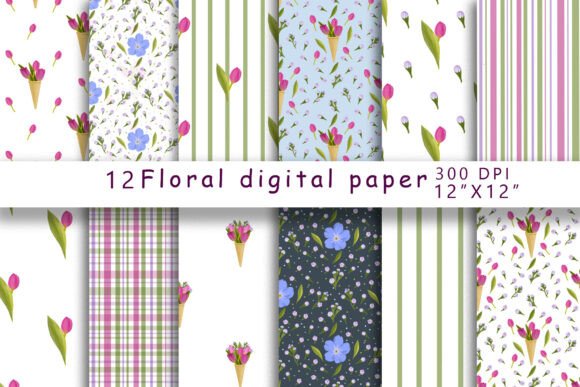
- Resolution (DPI): The standard for professional print work is 300 DPI (dots per inch). Lower resolutions, such as 72 DPI, are suitable for web display but will appear pixelated when printed at larger sizes. A robust collection offers 300 DPI to ensure crisp output for physical products.
- Dimensions: The "12x12" inch standard originated from traditional scrapbooking albums. However, in pixels, this translates to significant data. A true 12x12 inch file at 300 DPI measures 3600x3600 pixels. This large dimension allows for detailed cropping and zooming without degradation.
- File Count and Variety: A comprehensive set, such as one containing 12 distinct patterns, provides enough variety to maintain visual interest in a project while ensuring a cohesive color palette. Uniformity in style within a single ZIP file is crucial for maintaining design integrity.
When reviewing product descriptions, consumers should verify that the listed pixel dimensions match the claimed DPI. For instance, a file advertised as 300 DPI must indeed be 3600x3600 pixels for a 12x12 inch sheet. Discrepancies here often signal low-quality upscaled images rather than native high-resolution designs.
Bright Floral Patterns vs. Subtle Botanical Designs
Within the broader category of floral digital paper, there is a notable divergence in aesthetic approach. Understanding the difference between bright floral patterns and more subdued botanical styles helps users select the right tool for their specific audience and end-use.
The Impact of Bright Florals
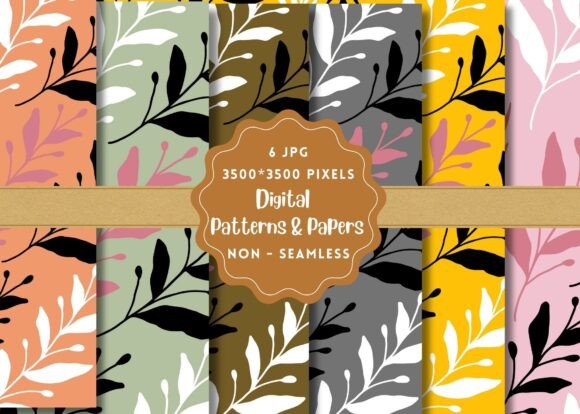
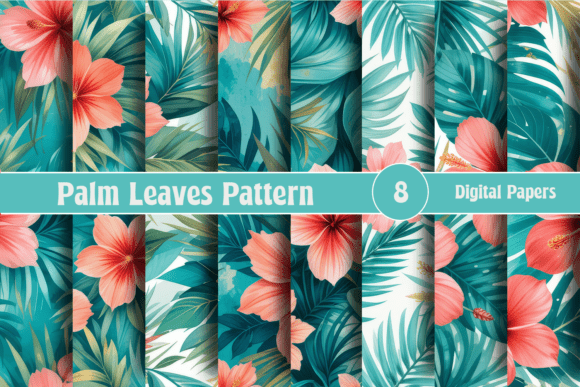
Bright Floral Patterns are characterized by high saturation, bold contrasts, and energetic compositions. These designs often feature oversized blooms, vivid color palettes including yellows, pinks, corals, and electric blues, and dynamic layouts. They are particularly effective in contexts where immediate visual impact is desired.
For example, in the realm of baby branding, bright florals convey joy, energy, and warmth. A baby store looking to establish a cheerful identity might find these patterns ideal for packaging, signage, and social media graphics. Similarly, greeting cards intended for celebrations like birthdays or spring events benefit from the optimism inherent in bright floral designs.
Subtlety and Sophistication
In contrast, subtle floral designs often utilize muted tones, watercolor effects, or minimalist line work. These are preferred in contexts requiring elegance or calmness, such as wedding stationery, luxury bedding, or corporate branding for wellness brands. While the current discussion focuses on bright patterns, it is important to note that the choice between brightness and subtlety depends entirely on the emotional response the creator wishes to evoke.
Comparing Digital Paper to Alternative Design Resources
When embarking on a design project, creators often weigh Floral Digital Paper against other available resources. Each option has distinct strengths and tradeoffs that influence the final outcome.
Digital Paper vs. Vector Graphics
Vector graphics (SVG, EPS) are scalable without quality loss and are editable. However, they often lack the textural richness of raster-based digital paper. Creating a realistic flower field in vectors requires significant skill and time. Digital paper offers an instant solution for complex textures. The tradeoff is that vectors cannot be resized beyond their original canvas without becoming pixelated, whereas 3600x3600 pixel digital paper can be downsized easily for web use or upsized for large-format printing, provided the source is high enough quality.
Digital Paper vs. Physical Scrapbooking Paper
Traditional scrapbookers may prefer physical paper for tactile projects. However, digital paper eliminates the cost of shipping, storage, and waste. It also allows for non-destructive editing; users can adjust opacity, blend modes, and colors digitally before printing. For mass production, such as creating dozens of identical postcards, digital paper is vastly more efficient and cost-effective.
Digital Paper vs. Stock Photography
Stock photos offer realism but often come with licensing restrictions regarding commercial use and scalability. Digital paper patterns are usually sold under licenses that permit extensive commercial application, including resale of finished goods. Furthermore, stock photos are static scenes, whereas digital paper patterns are seamless tiles that can repeat infinitely, making them superior for background creation in textiles or wallpaper.
Practical Applications and Use Cases
The versatility of Floral Digital Paper makes it suitable for a wide range of industries. Below are specific scenarios where this resource proves particularly valuable.
Textile and Baby Apparel Design
One of the most lucrative applications for high-resolution floral patterns is in the textile industry. With a resolution of 3600x3600 pixels, these files are dense enough to be used directly in fabric printing processes. Designers creating baby clothes, blankets, or nursery decor require patterns that are not only visually appealing but also technically precise. The bright colors of bright floral patterns translate well to cotton blends and organic fabrics, appealing to parents seeking cheerful, safe, and aesthetically pleasing items for infants.
Branding and Marketing Materials
Small businesses, particularly those in the handmade or boutique sector, rely heavily on consistent visual branding. A set of 12 coordinated floral patterns allows a brand to maintain a unified look across multiple touchpoints. For instance, a baby boutique can use one pattern for its website header, another for email newsletters, and a third for printed loyalty cards. This cohesion builds trust and recognition among customers.
Stationery and Greeting Cards
The stationery market remains strong, driven by the desire for personalized and artisanal touches. Floral Digital Paper serves as the foundation for custom greeting cards. Because the files are instant downloads, entrepreneurs can respond quickly to trends. If a specific flower is trending on social media, a designer can incorporate that motif into their digital paper collection and immediately produce new card lines without waiting for physical shipments.
Scrapbooking and Digital Journaling
While physical scrapbooking persists, digital scrapbooking has grown exponentially. Users who create digital albums for family history or travel journals benefit from the ease of dragging and dropping Floral Digital Paper backgrounds. The 12x12 inch format is the universal standard for digital scrapbooking apps, ensuring that elements fit perfectly without manual resizing.
Evaluating Tradeoffs and Limitations
While Floral Digital Paper offers numerous benefits, it is not a universal solution for every design challenge. Understanding its limitations is key to effective decision-making.
First, the reliance on raster formats means that extreme enlargement beyond the original 3600x3600 pixel dimensions will result in pixelation. For massive billboards or building wraps, vector-based floral illustrations or specialized large-format raster files would be required. Second, because the pattern is fixed, customization options are limited compared to vector files. Users cannot easily change the shape of a petal or the hue of a leaf without advanced photo editing skills.
Additionally, the aesthetic appeal is subjective. Bright floral patterns may not suit all brand identities. A minimalist tech startup or a somber memorial service provider would likely find bright florals inappropriate. Therefore, careful consideration of the target audience’s preferences is necessary before integrating these assets into a project.
Conclusion: Making an Informed Choice
Selecting the right design resources requires balancing technical quality with aesthetic intent. Floral Digital Paper, particularly in high-resolution formats like 300 DPI 3600x3600 pixel JPEGs, offers a powerful toolkit for creators in the baby industry, textile design, and stationery markets. Its ability to provide instant, scalable, and commercially viable backgrounds makes it a superior choice over many traditional alternatives for rapid prototyping and mass production.
However, buyers should scrutinize the technical specifications and ensure the visual style aligns with their brand voice. By understanding the distinctions between bright and subtle patterns, and recognizing the differences between digital paper and vectors or stock photos, designers can leverage these resources effectively. Whether for creating adorable baby fabrics, elegant postcards, or vibrant scrapbooking pages, the right floral digital paper can elevate a project from ordinary to exceptional.